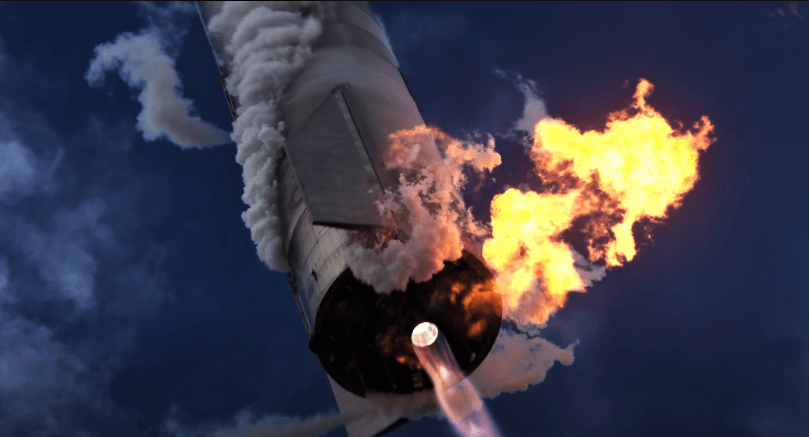
Only some hardware upgrades and an FAA green light stand between SpaceX and a Starship Super Heavy launch, which may be the biggest of the year.
The Starship Super Heavy stack is set to make its debut this year, launching from SpaceX’s launch site in Starbase – Boca Chica, Texas. The site has been undergoing robust upgrades, with crews buzzing around it 24/7.
This follows a successful Wet Dress Rehearsal of the full stack (Ship 24 and Booster 7), and the historic 31-engine, ~50% throttle static fire of B7 back in February.
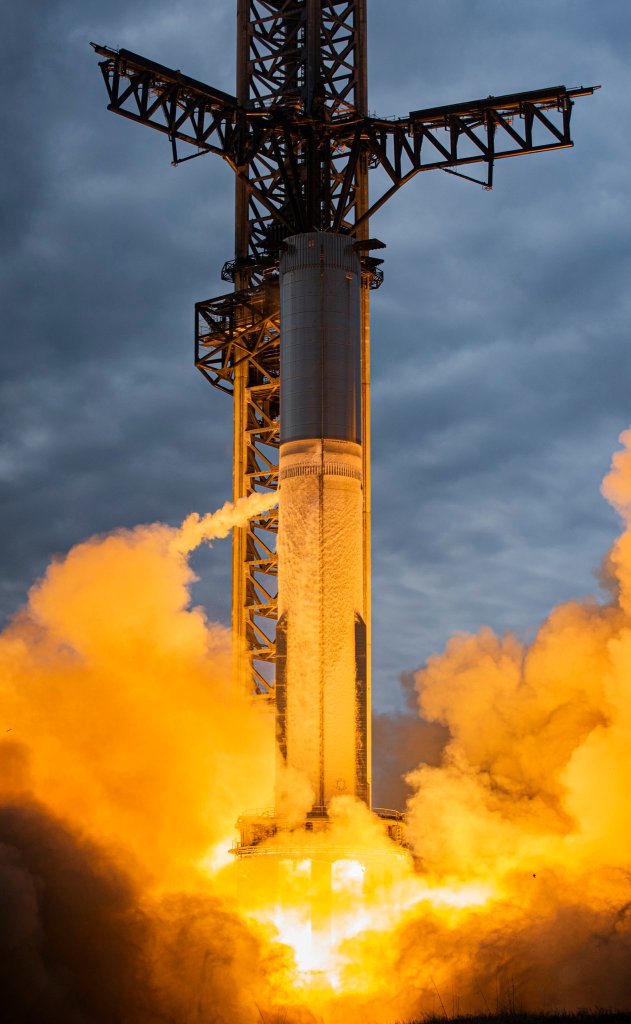
The upgrades include external and internal shielding of the orbital launch table, which sits on top of six vertical pillars, collectively referred to as the Orbital Launch Mount (OLM). The OLM is one of the most technically complex structures in the Starbase launch site, as it has many functions it must perform simultaneously. One of those is fueling the first stage of the rocket while holding the full stack down until the last seconds of the countdown. That is why it houses complex networks of piping, which need to be protected.
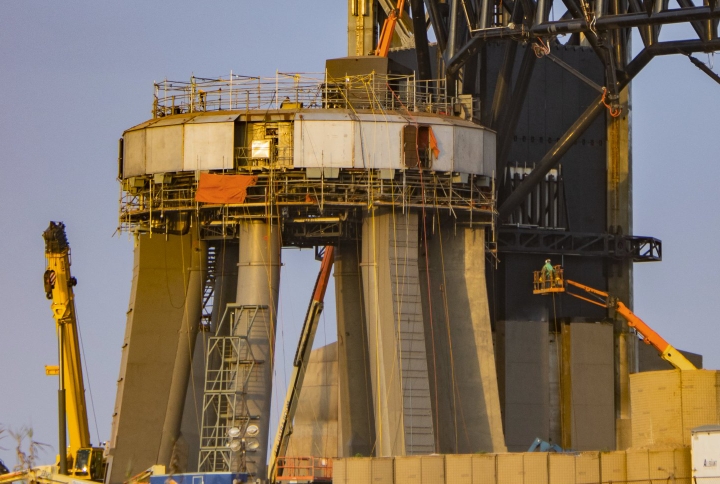
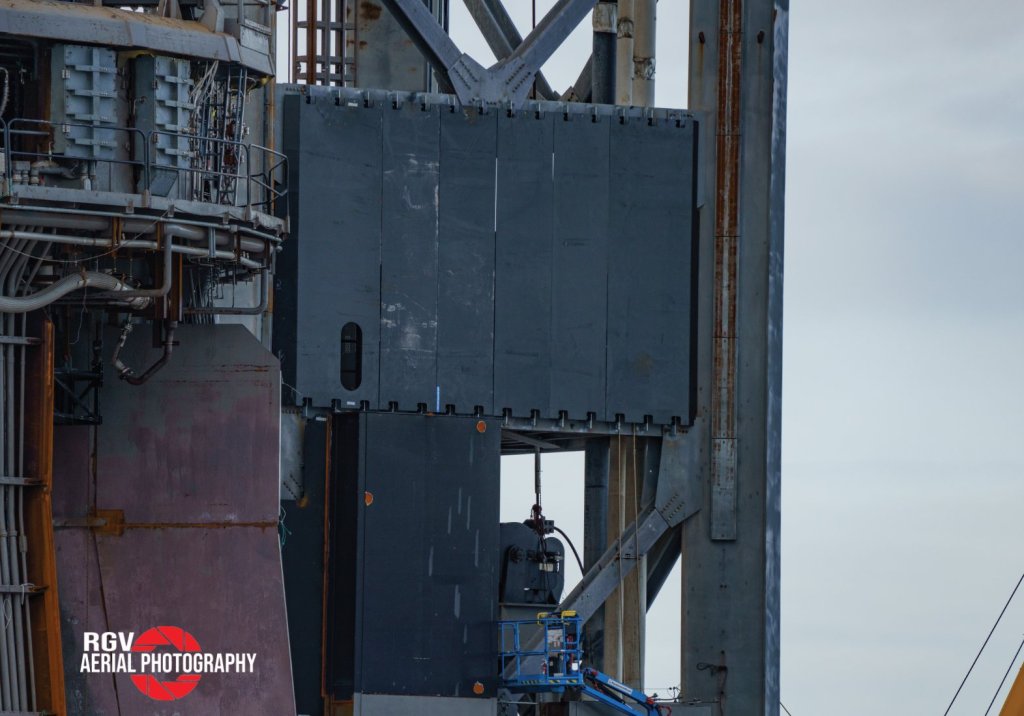
SpaceX began adding thick steel panels to the outer-facing side of the launch table a few weeks ago. This process is now complete, the majority of the internal structures and key components such as the fueling pipes have been covered, with some pipes still partially exposed. These are expected to be covered as well over the next coming weeks.
Cladding had also begun to be added to the Orbital Launch Integration Tower (OLIT) months earlier, but there hasn’t been much movement in that regard. The cladding protection is worth a mention though, at least for the two sides closet to the launch mount, thus exposed to 33 roaring raptor engines when the vehicle does launch and leaves the pad, because it would seem like a necessary upgrade so to protect the pipework that runs up the tower to the middle section housing the Starship fueling arm, or Starship Quick-Disconnect arm (SQD arm).
Ship 24 has also been undergoing some minor upgrades of its own while parked at the rocket garden. We have seen its Thermal Protection System (TPS) or heat shield getting worked on, with the crane attachment points located on its nosecone, being removed and the remaining gaps filled with TPS tiles, completing its heat shield.
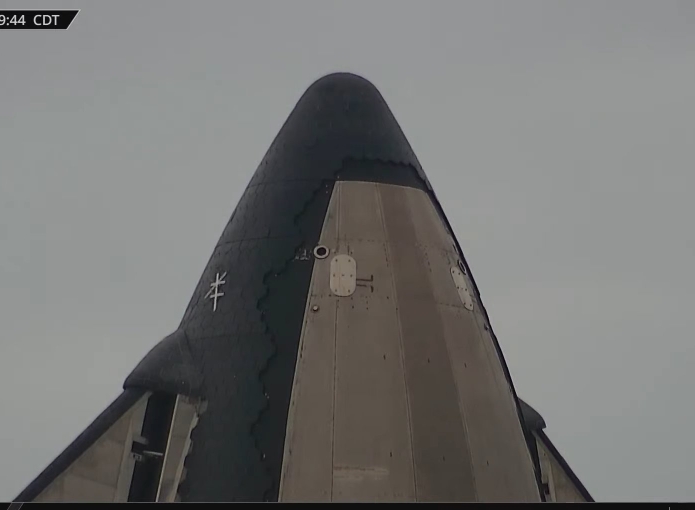
A new jig had been spotted some weeks ago at the Starbase launch complex which is believed to be the replacement for the crane attachment points for ship lifting operations.
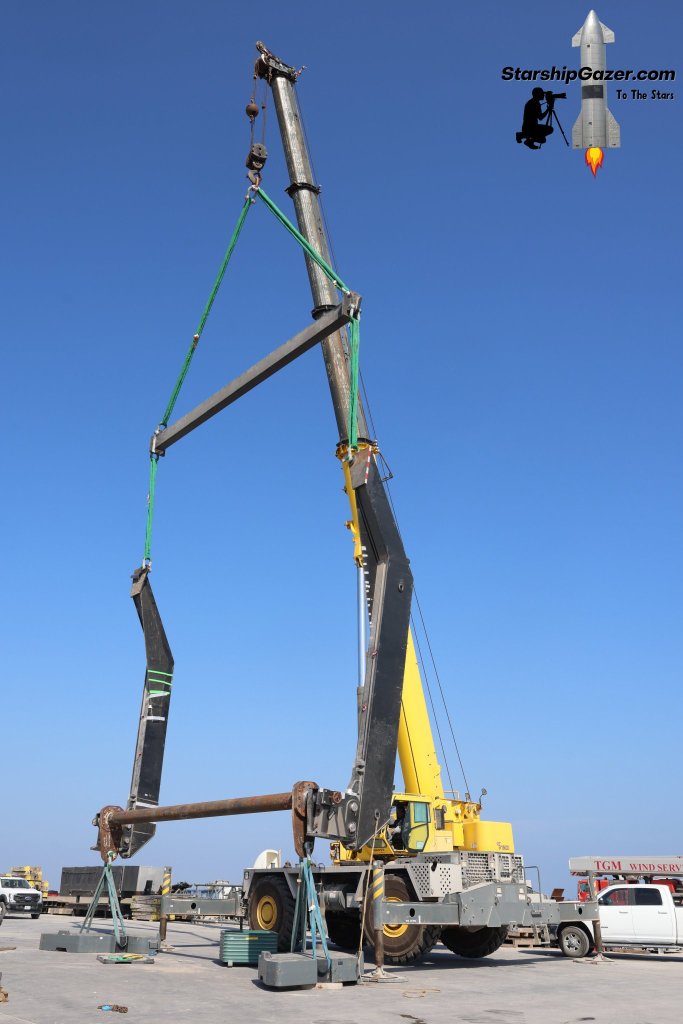
This jig will utilize the lifting points right below the forward flaps of the ship, a crane will then be attached to it for lifting. The OLIT chopsticks are currently used to lift the ships atop the boosters for full stack operations, so this new jig will likely be used in the future to move the ships around the launch site, and for lifting onto and off the suborbital pads.
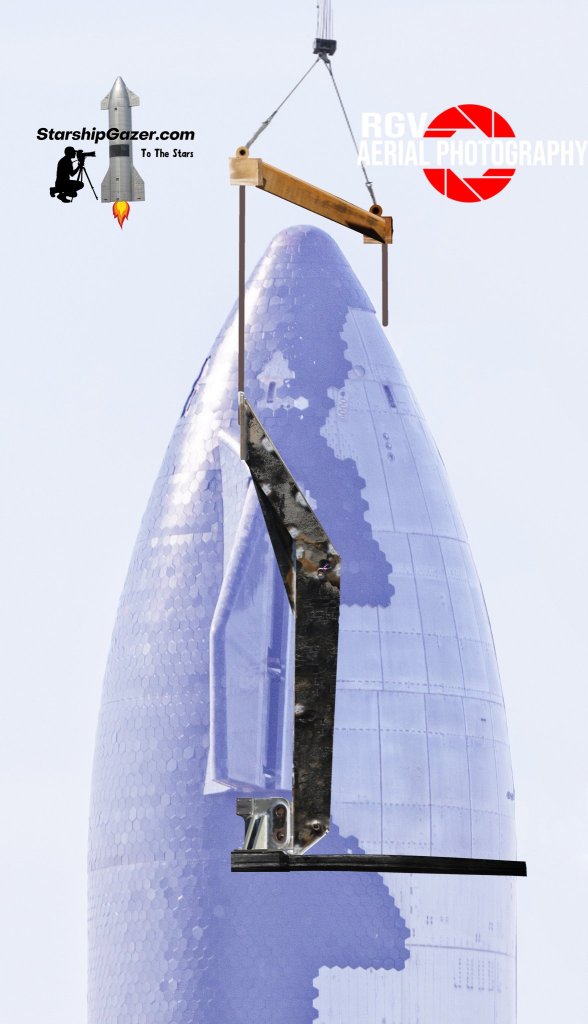
Having completed its static fire campaign weeks ago, the completion of S24’s heat shield work will mean S24 will be ready to roll back to the launch site, hopefully for the last time, to wait for the big day.
As for B7, it was lifted off the launch table some weeks ago, to make way for SpaceX crews to work on the inner-side of the structure. That is quite literally the most action it has seen since its ground-breaking static fire. It was lifted back onto the OLM on the 29th of March.
The chopsticks, one of whose current purposes is to lift and stack/ de-stack the vehicles had been getting worked on as well, with scaffolding set up on them. It is unclear exactly what work the crews had been doing on them, but the scaffolding had begun being removed recently, suggesting whatever the work was, is now finished.
Besides these mentioned and known upgrades still ongoing, and of course the ones we cannot see, SpaceX still awaits a launch license from the Federal Aviation Authority (FAA) and there really is no set timeframe for that, at least not that is publicly known. The company’s CEO Elon Musk said on Twitter that should there be no unexpected delays with the FAA, Starship Super Heavy may be ready to take to the skies in late April.
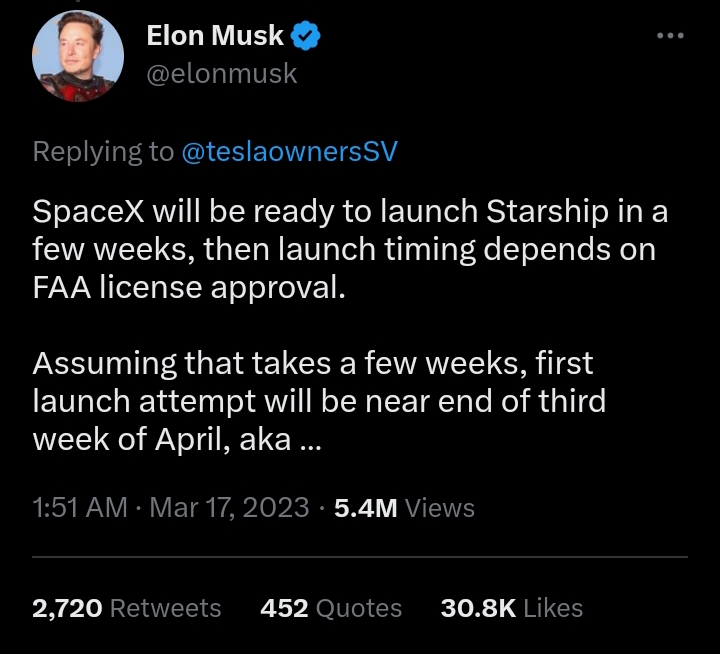
SpaceX is clearly progressing as carefully as it can to avoid a rapid unscheduled disassembly (RUD) on the pad, as Musk has mentioned on Twitter earlier this year. Recent activity and pace of work in the launch site however, suggest that we may now be close to what may turn out to be the biggest launch of 2023.
Comment anything I might have missed in the box below, and connect with me on Twitter here. I will see you soon.🙂🚀
 Get Space